
After Hours Notary for Documents: Complete Guide
Table of Contents
What Is an After Hours Notary and Why You Need One
Mobile Notary Services: On-Site Document Verification When You Need It
Documents Requiring Notarization and When Speed Matters
Real Estate and Loan Documents
Estate Planning and Medical Documents
Corporate and Employment Verification
How to Prepare for a Mobile Notary Appointment
Mobile Notary Fees for After-Hours Service
Emergency Hospital Notary Services and Bedside Notarization
Remote Online Notarization vs. Mobile Notary: Which Is Right for You
Safety and Verification: Confirming Your Notary's Credentials
Frequently Asked Questions
Last Updated: September 26, 2026
What Is an After Hours Notary and Why You Need One
An after hours notary is a licensed professional who provides document authentication and notarization services outside standard business hours, evenings, early mornings, weekends, and sometimes 24/7. Unlike traditional notary services confined to 9-to-5 operations, an after hours notary meets clients at their location or office to witness signatures, verify identity, and apply an official seal to legal documents when conventional services aren't available.
Demand for after hours notary services has grown sharply: real estate closings happen outside business hours, medical emergencies require urgent authentication, business deals cross time zones, and professionals working non-standard schedules can't take time off. Sennett Mobile Notary built its entire operation around the principle that your documents shouldn't wait for Monday morning.
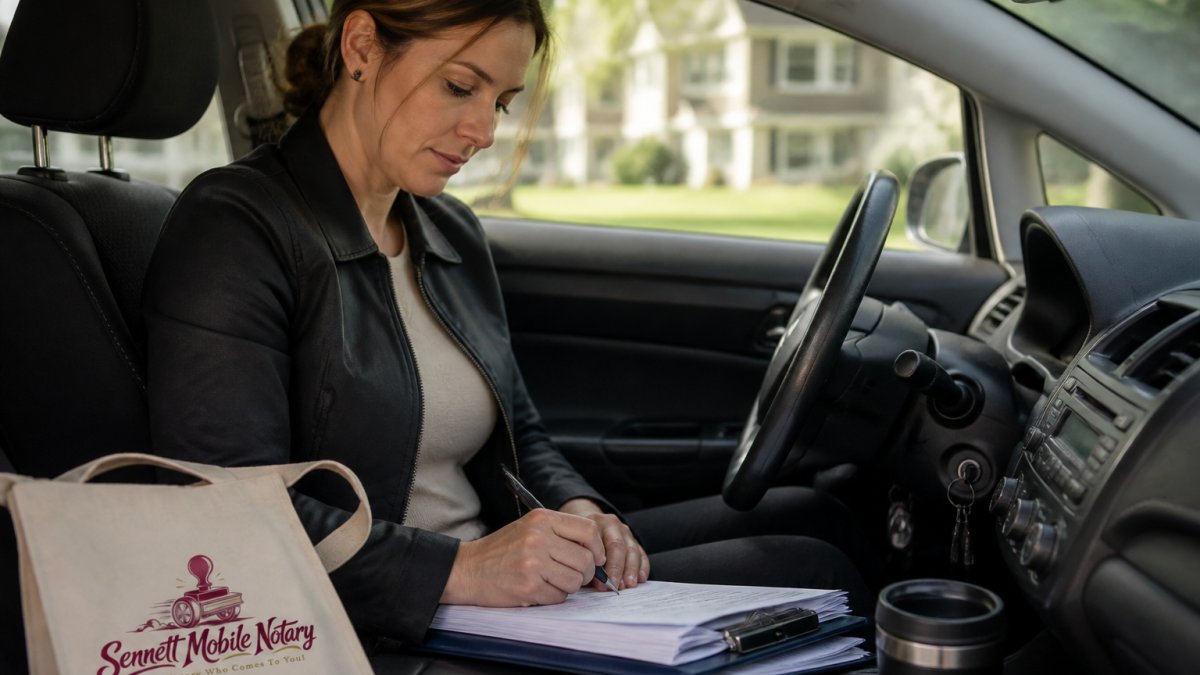
A mobile after hours notary comes to you, your home, office, or hospital room, eliminating travel and scheduling conflicts. This matters when you're under a deadline, have limited mobility, or work non-standard hours.
Pro Tip The most common mistake is waiting until the last minute. If you need an after hours notary appointment, book it at least 24 hours in advance when possible. Emergency same-day service exists, but advance scheduling ensures availability and often comes at no premium cost.
Mobile Notary Services: On-Site Document Verification When You Need It
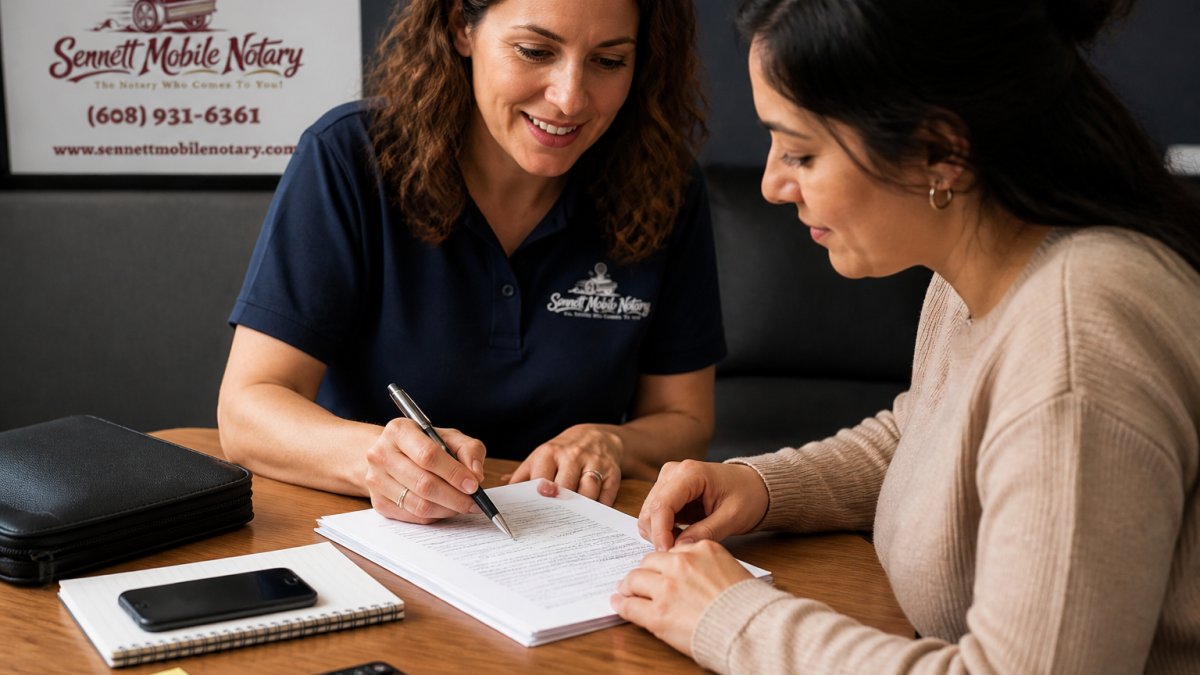
During a mobile notary visit: the notary verifies your identity with a valid government-issued ID, reviews documents for completeness, witnesses your signature, applies their official seal and certificate. The process typically takes 15-30 minutes for standard documents.
Mobile notary services eliminate scheduling conflicts for real estate closings, powers of attorney, and estate planning. For individuals with limited mobility, elderly clients, or patients in care facilities, bedside notarization becomes necessary.
Sennett Mobile Notary handles complex loan signings, real estate closings, and I-9 verifications. Understanding loan documents, closing procedures, and jurat requirements often determines whether your transaction closes on time.
Key Takeaway Mobile notary services work best for time-sensitive situations, clients with limited mobility, and transactions requiring specialized notarial knowledge like loan signings or complex estate documents.
Documents Requiring Notarization and When Speed Matters
Real estate transactions, legal agreements, and medical directives often require notarization and can't wait. Understanding which documents need notarization helps you recognize when an after hours notary becomes essential.
Real Estate and Loan Documents
Real estate closings represent the largest category of notarized documents. Purchase agreements, mortgage notes, deed of trust documents, and closing disclosure forms all require notarization, often involving 10-20 pages per closing.
Loan signings demand accuracy, missing initials or improper acknowledgments can delay funding by days. When a Friday closing has a Monday funding deadline, an after hours notary on Friday evening becomes critical.
Commercial loan documents carry higher stakes with compressed timelines. The notary must understand corporate notarization requirements, acknowledgments versus jurats, and signatory authorization.
Estate Planning and Medical Documents
Power of attorney documents, living wills, healthcare directives, and HIPAA authorization forms frequently require notarization. When someone is in declining health or facing surgery, these documents become urgent.
Hospital notarizations require the notary to navigate medical facility security and work with patients who may be medicated or in pain. The notary must still verify identity and ensure understanding, standards don't relax in hospitals.
Corporate and Employment Verification
I-9 employment verification forms require notarization or certified identity copies. Businesses need documents notarized quickly to meet onboarding deadlines.
Real estate agents managing multiple closings or businesses onboarding staff need notaries with capacity and reliability to handle back-to-back appointments without delays.
How to Prepare for a Mobile Notary Appointment
Preparation determines whether your appointment runs smoothly. The notary can't notarize incomplete documents or unsigned pages.

Gather all documents and mark where signatures belong. Verify dates are correct, backdating or postdating is illegal and the notary will refuse notarization.
Bring a valid government-issued ID (driver's license, passport, military ID, or state ID). Expired IDs are acceptable if they clearly show your photo. If your appearance has changed significantly, bring a second form of identification.
Ensure all parties who need to sign are present. The notary cannot notarize signatures made in their absence, even with authorization.
Read documents before the notary arrives to confirm accuracy. Correct errors before signing, the notary won't notarize visible corrections unless you initial them.
Arrange payment before the appointment. Ask Sennett Mobile Notary or your chosen provider about accepted payment methods. Ask Sennett Mobile Notary or your chosen provider about accepted payment methods.
Watch Out Never sign documents before the notary arrives. The notary must witness your signature, signing beforehand invalidates the notarization and means starting over with new documents.
Mobile Notary Fees for After-Hours Service
Pricing for mobile notary services depends on several factors: the number of documents, the complexity of the notarization, the time of day, and your location relative to the notary's service area. (Source: requirements for real estate transactions)
Standard notary fees typically cover a base service charge plus per-signature or per-document costs. After hours notary appointments, evenings, weekends, or early mornings, may include a premium or service adjustment. Emergency same-day service sometimes carries additional fees compared to appointments scheduled 24-48 hours in advance.
Travel fees represent a significant component of mobile notary pricing. A notary traveling 30 minutes to reach your location factors that time into their service cost. Remote locations within the service area may have higher travel fees than appointments in central business districts.
For specific pricing on after hours mobile notary services, contact Sennett Mobile Notary directly or visit their website for a quote. Pricing varies based on your specific needs, the number of documents, the appointment time, and your location. Rather than estimate costs that may not reflect current rates, ask your chosen provider for transparent pricing before booking.
Understanding what affects pricing helps you make informed decisions. A simple power of attorney notarized on a Tuesday afternoon costs less than a complex loan signing on Saturday evening. Knowing this difference helps you budget and recognize whether you're receiving fair value.
Emergency Hospital Notary Services and Bedside Notarization
Hospital notarizations represent the most specialized and time-sensitive mobile notary service. When someone is hospitalized and needs urgent document authentication, a healthcare directive, power of attorney, or will, a standard notary appointment becomes impossible.
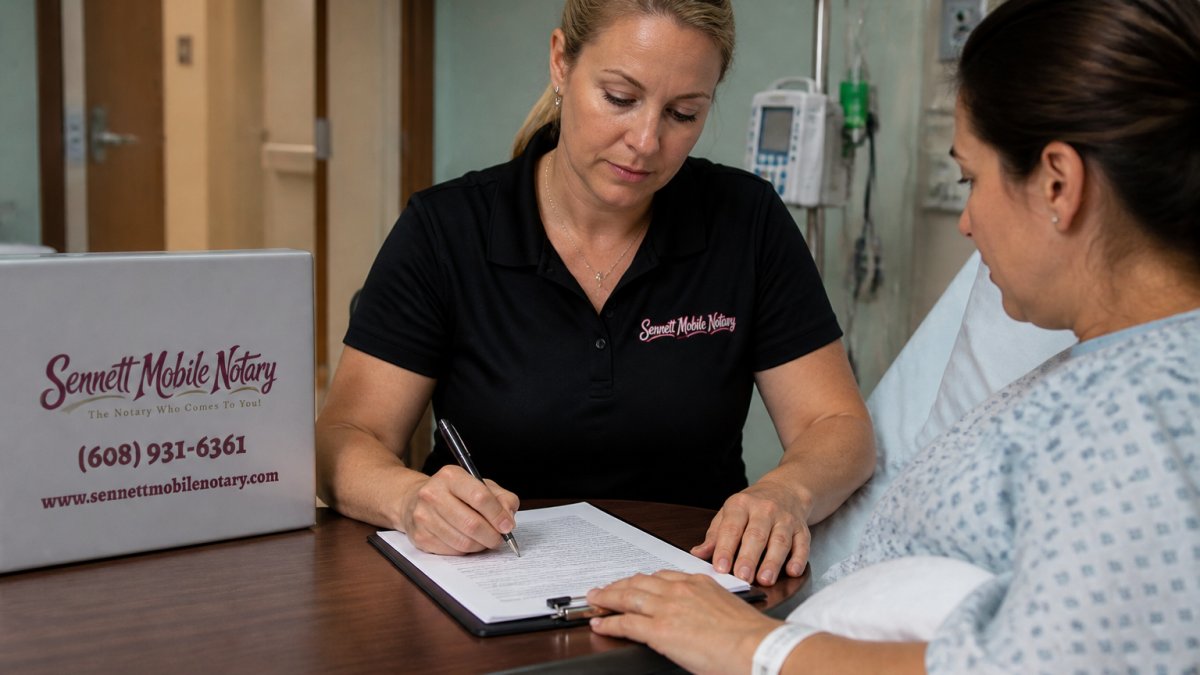
Bedside notarization requires the notary to enter a medical facility, locate the patient, verify their identity, and complete the notarial act in a hospital room or care facility setting. This demands more than basic notary skills. The notary must understand HIPAA privacy requirements, navigate hospital security protocols, and assess whether the patient is mentally competent to sign documents.
A common concern is whether someone in declining health or medicated can legally sign notarized documents. The answer depends on the person's mental capacity at the time of signing. The notary must confirm that the person understands what they're signing and is signing of their own free will. Medication, pain, or age alone doesn't disqualify someone, but confusion or inability to communicate does.
Sennett Mobile Notary handles hospital notarizations regularly. The key is contacting us quickly when the need arises. Emergency bedside notarization may require same-day coordination with the hospital, but it's possible when you reach out promptly.
The cost of emergency hospital notarization reflects the specialized nature of the service and rapid response requirements. Expect higher fees than standard appointments, but recognize that the alternative, delaying critical documentation, creates far greater complications.
Remote Online Notarization vs. Mobile Notary: Which Is Right for You
Two distinct paths exist for after hours notarization: remote online notarization (RON) and physical mobile notary services. Understanding the differences helps you choose the right approach for your specific documents.
Remote Online Notarization (RON) uses digital platforms where you sign documents electronically while a notary observes via video conference. Remote Online Notarization (RON) uses digital platforms where you sign documents electronically while a notary observes via video conference. You upload your documents, verify your identity through the video call, sign electronically, and receive notarized documents via email.
RON works well for documents that don't require physical signatures, many financial documents, affidavits, and certain legal forms qualify. The cost is typically lower than mobile notary services. No travel time means faster service and lower overhead.
Mobile Notary Services involve a licensed notary traveling to your location to witness your physical signature on paper documents. The notary verifies your identity in person, witnesses you sign the original document, applies their official seal, and provides you with the notarized original.
Mobile notary services are required for documents that demand original signatures on physical paper, real estate closing documents, mortgage notes, certain loan agreements, and many legal instruments.
Safety and Verification: Confirming Your Notary's Credentials
Notaries handle sensitive documents and personal information. Verifying that your notary is legitimate, licensed, and trustworthy protects your documents and your identity.
Frequently Asked Questions
How quickly can I get an after hours notary for documents?
After hours notary availability depends on the service. Mobile notary providers typically respond to urgent requests within hours, while remote online notarization (RON) platforms offer access with sessions starting within minutes. For same-day evening or weekend appointments, contact your local mobile notary service directly. Response times vary based on demand and your location within their service area.
What documents typically require after-hours notarization?
Common documents needing urgent notarization include real estate closing documents, power of attorney forms, medical directives, loan agreements, and employment verification. Seniors in care facilities often require bedside notarization for estate planning. Business owners may need I-9 verification or corporate documents notarized outside standard hours. Time-sensitive situations like hospital admissions or urgent legal matters frequently drive demand for after-hours services.
How do I verify the credentials of an after-hours mobile notary?
Verify that the notary holds a current commission in your state. Request their notary public identification number and confirm it through your state's notary registry or Secretary of State office. Ask about their experience with your specific document type. Confirm they maintain an official notary seal and journal. Legitimate notaries are transparent about their credentials and happy to provide verification.
What should I have prepared before an after-hours notary arrives?
Gather all documents requiring notarization and review them for completeness and accuracy. Bring a valid government-issued ID such as a driver's license or passport for identity verification. Have the document signer present and ready; the notary must witness the actual signing. Know the signer's relationship to the document and their willingness to sign. Prepare any questions about the notarization process. If multiple documents need notarizing, organize them in order. Have a clean, well-lit space available for the notary to work.
Book Appointment
Comments